Figures & Finance

How We Work

A clear operating method for work that cannot be left unclear.

Financial work earns trust through structure: the same stages in the same order every month, each with a named owner and evidence that it finished.
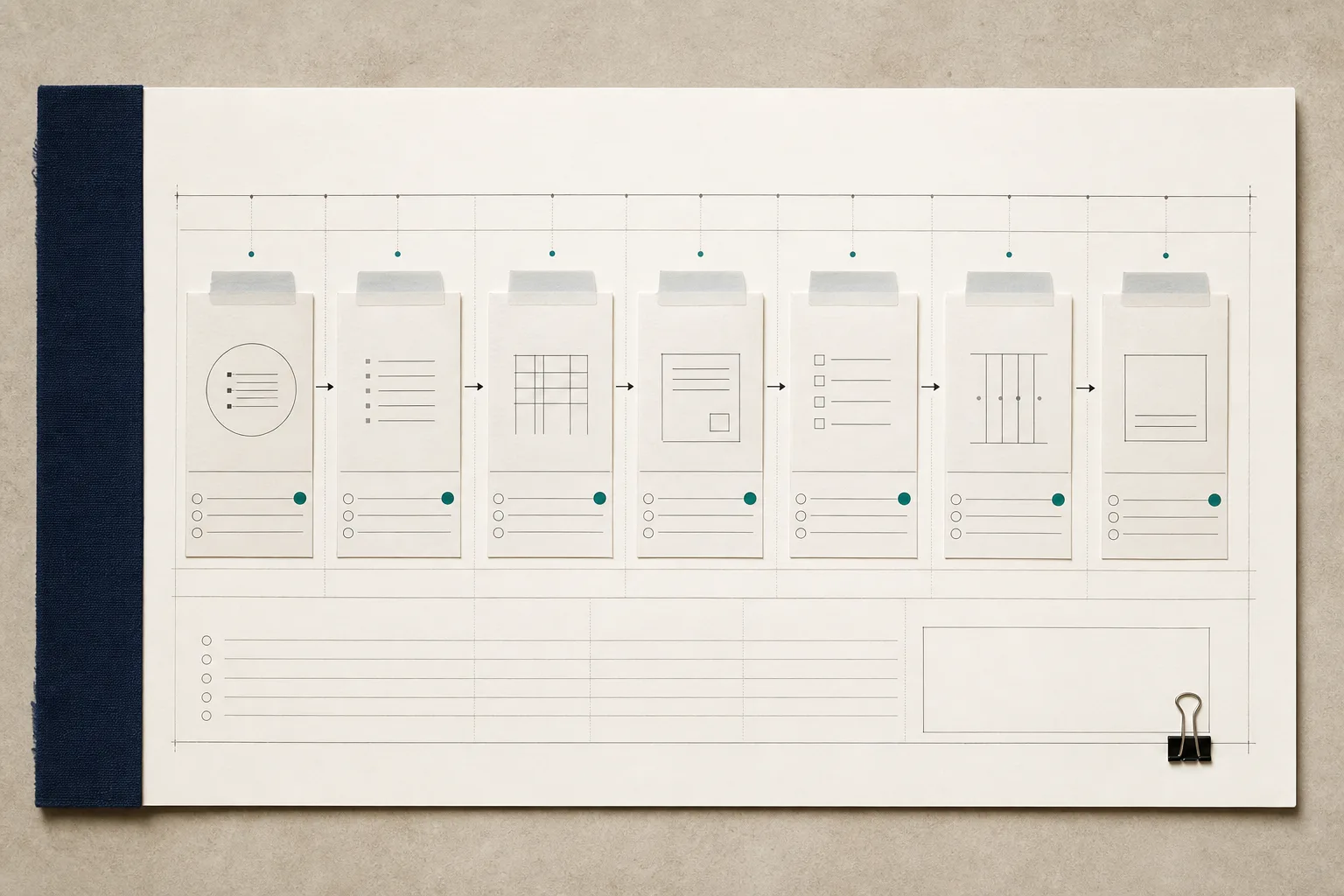
A bound planning board photographed top-down: seven envelope cards in a row, each holding a different schedule or checklist, connected by arrows along a dated timeline with a teal marker on every card.

The monthly rhythm

Seven stages, every period, in this order.

  1. Transactions, invoices, payroll inputs, and supporting documents enter the system as they occur, not in a month-end scramble.

    Figures & Finance

    Maintain the capture channels, watch for gaps, and chase missing items early.

    The client

    Provide system access and route documents and queries through the agreed channel.

    Evidence of completion

    A dated record of the period's inputs and an open-items list showing exactly what is still missing.

  2. Bank, card, and control accounts are matched against the records, and every difference is surfaced rather than smoothed over.

    Figures & Finance

    Perform the reconciliations and work each unmatched item to a conclusion.

    The client

    Answer queries on items that need business context.

    Evidence of completion

    Reconciliation statements with exceptions resolved or explicitly carried forward with a reason.

  3. A second pass checks the quality of the work: classification, cut-off, and unusual movements.

    Figures & Finance

    Review the prepared work and mark exceptions instead of hiding them.

    The client

    Confirm the judgment calls that depend on knowledge only the business has.

    Evidence of completion

    Review notes and a cleared exception list.

  4. The period is finalized and locked. Late adjustments follow a controlled path instead of silently rewriting history.

    Figures & Finance

    Run the close checklist and lock the period.

    The client

    Approve the close position.

    Evidence of completion

    A completed close checklist with dates and owners.

  5. Detail becomes a decision-ready management pack: statements, movements, and commentary.

    Figures & Finance

    Prepare the pack and explain what moved and what needs a decision.

    The client

    Read the pack and bring questions to the review conversation.

    Evidence of completion

    The issued management pack for the period.

  6. The conversation turns to what the numbers mean for the next move—cash, pricing, spending, and priorities.

    Figures & Finance

    Frame the options and their consequences clearly.

    The client

    Make the decision. It stays with the business.

    Evidence of completion

    Noted decisions and actions, each with an owner.

  7. Recurring friction is removed: process gaps, timing problems, and quality issues get fixed at the source.

    Figures & Finance

    Log issues during the month and adjust the process, not just the workaround.

    The client

    Agree the changes that touch the business's side of the process.

    Evidence of completion

    An issue register that gets shorter over time.

Responsibility

Three parties, one written boundary.

Every engagement defines what Figures & Finance prepares and coordinates, what stays with the client, and what belongs to registered external advisers. That boundary is agreed in writing before recurring work starts, and every deliverable names its owner.

Exceptions follow the same discipline: an unresolved item gets an owner and a date, and escalates on a defined path instead of waiting in a queue.

See the method applied to your setup.

A clarity call walks the current close, reporting, and cash process against this rhythm and shows where it breaks.

Book a clarity call